
This morning, while browsing a recent article from Le Monde by Velum Marion Kindermans regarding 165 French industrial sites threatened since September, I felt that familiar sensation of the great divide. Not just geographically, the 14,000 kilometres that separate me from Paris, but especially this contrast between two worlds evolving in opposite directions.
Since I moved to Perth a few years ago, after fifteen years spent in the French business ecosystem, I have observed this divergence intensifying. On one side, the Europe I left, with its factories closing and mass layoffs multiplying. On the other, Western Australia where I live today, which is building new industrial capacities in future-oriented sectors.
This dual perspective, European by my training and Australian by my daily life, allows me to grasp something essential: we are not facing a simple economic cycle, but rather a structural shift that is redrawing the global industrial geography.
When Europe loses its factories
The Le Monde article makes for grim reading. Since September, 165 industrial sites face closure in France. The consultancy Trendeo, which tracks these movements, names names: Brandt (700 jobs in agri-food), La Trinitaine (traditional biscuit-maker from the Vendée), not to mention the giants (Michelin, Arcelor Mittal) quietly shrinking their workforces.
The affected sectors cover a wide spectrum: automotive, metallurgy, chemicals, consumer goods. This is no longer a sectoral crisis; it is a widespread haemorrhage.
European figures confirm the scale of the phenomenon. The French manufacturing PMI (Purchasing Managers' Index) fell to 44.1 in July 2024. Anything below 50 indicates contraction. Industrial production in the European Union dropped by 2% in 2024, with a decline of 6% since 2022. Even more revealing: Europe has lost over 800,000 manufacturing jobs since the pandemic.
The heart of the problem? Energy. Industrial electricity prices in the European Union range from USD 0.19 to USD 0.27 per kilowatt-hour according to the latest Eurostat data (2024-2025), which is 2 to 3.5 times higher than American or Chinese prices. Germany, once the European industrial powerhouse, now spends over 4% of its GDP on energy subsidies to keep its industries afloat.
This difference is not cyclical. It is structural, rooted in risky energy choices (the German nuclear phase-out) and a dependence on Russian gas that had to be hastily replaced with much more expensive imported LNG.
Meanwhile, 14,000 kilometres away
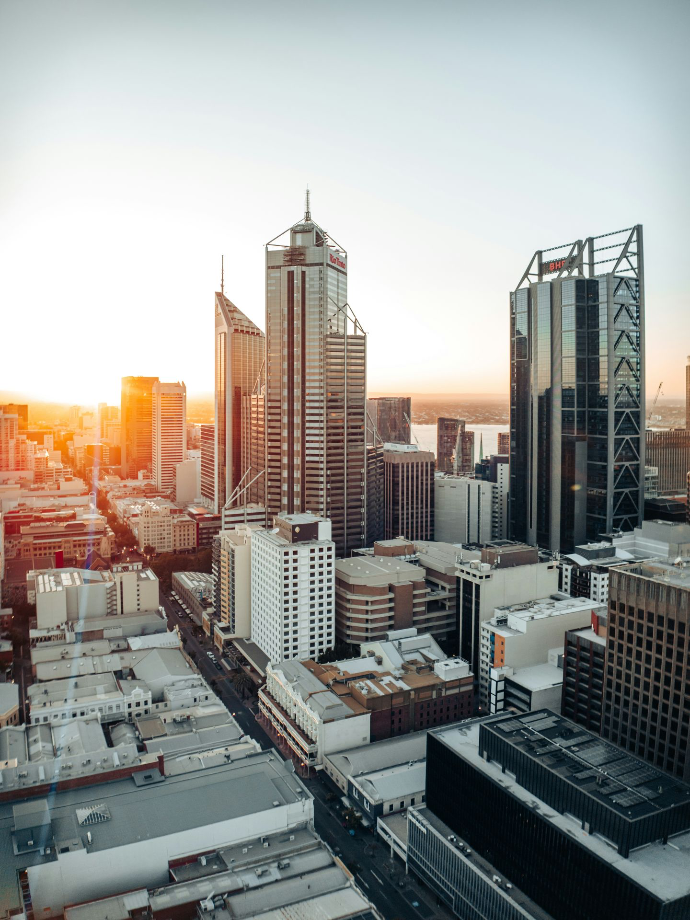
In Perth, the morning begins differently. The local newspaper headlines the inauguration of a new green hydrogen research centre, the expansion of the Fremantle port to accommodate more ships carrying processed minerals, and the launch of a new lithium processing facility.
Western Australia is not closing factories. It is opening them. Not to replace a declining industrial base, but to add value to a historically extractive economy. This could be called a strategic industrial upgrade.
The numbers speak for themselves. The manufacturing sector contributes over AUD 18 billion (approximately EUR 11 billion) to the state's gross product, with more than 5,100 local companies engaged in manufacturing. This is not huge compared to Germany or France, but it is growing. And importantly, it is in the right sectors: critical mineral processing, green hydrogen, defence, advanced technologies.
The energy equation: more complex than it seems
Let's talk frankly about energy, as this is where the important nuances lie. Retail electricity prices in Australia (what households and small businesses pay) are actually quite high: around USD 0.26 per kWh in 2025, which is comparable to European averages. Perth, where I live, even saw its prices increase by 2.5% in July 2025.
But here's where it gets interesting: the mining industry in WA, which accounts for the bulk of the state's industrial consumption, does not pay these retail prices. Large companies negotiate direct contracts with producers or develop their own renewable facilities.
Rio Tinto and BHP are developing their own solar and wind farms. Gold Fields approved a 42 MW wind and 35 MW solar project at St Ives in 2024, designed to cover 73% of the mine's energy needs. AngloGold has a 62 MW hybrid solar-wind project at Tropicana. These companies bypass the grid entirely and generate their own electricity at costs well below retail.
The real difference with Europe is therefore not so much in retail prices, but in:
- The ability for self-production: WA has unlimited space and abundant solar/wind resources. A mine can install its own solar panels on dozens of adjacent hectares. Try doing that in Germany or France.
- The absence of a universal carbon tax: unlike Canada or Europe, Australia does not have a universal carbon price. Only 200 facilities are covered by the Safeguard Mechanism.
- Regulatory stability: when a company invests in a solar facility in WA, it knows that the rules will not change radically every two years.
It is this combination that makes WA attractive for energy-intensive industries, not simply a lower price per kWh.
Political stability and regulatory predictability
The second pillar is less spectacular but just as decisive. When the WA government launches a strategy like Diversify WA in 2019, it is not abandoned at the first change of majority. It is strengthened, refined, with Future State in 2024. Investments follow this vision consistently. For an industrialist considering investing 500 million dollars in a factory with a return over 15 years, this predictability is worth its weight in gold.
Compare this with Europe, where political oscillations and changing regulatory frameworks create uncertainty that discourages long-term industrial investments. A German industrialist recently explained to me that he can no longer plan beyond two years as energy and environmental rules evolve unpredictably. In 2020, it was about phasing out coal. In 2022, with the Ukrainian crisis, there were pleas to turn it back on. In 2023, new climate targets. Regulatory uncertainty has become the primary barrier to investment in Europe, even before the cost of energy.
In WA, three structural factors make the difference. First, stable governments that can govern for multiple terms allow for a long-term vision. Second, a bipartisan consensus on major economic directions: no one fundamentally questions the importance of the mining sector, the diversification towards renewables, or the development of the defence industry. Strategies survive changes in government. Finally, concrete investment programs that are sustained over time: Local Manufacturing Investment Fund (15 million AUD), Investment Attraction Fund (100 million AUD), New Industries Fund (25.8 million AUD).
The concrete example is striking. In 2019, several European companies were simultaneously evaluating green hydrogen projects in Germany and in Western Australia. Five years later, those that chose WA are in construction phase (Murchison, with 814 million AUD in confirmed financing), while several German projects remain stuck in the maze of regulatory approvals and shifting subsidies. This isn't a question of German competence or will. It's that the regulatory framework changes faster than the time it takes to build these infrastructures.
This difference could indeed be the subject of an excellent dedicated article: how regulatory stability is becoming the new competitive advantage of jurisdictions in the global competition for industrial investments. A thorough comparative analysis between WA, Germany, and France would reveal fascinating insights.
Beyond mining: the sectors that really matter
Energy transition: from resource to finished product
WA is no longer just exporting iron ore or natural gas. The state is developing an integrated processing industry.
Take the Murchison Green Hydrogen project. 814 million AUD in federal funding, a capacity of 1.5 GW of electrolysis, 3,600 tonnes of green ammonia per day. It will be one of the largest renewable hydrogen facilities in the world, fully powered by 1.2 GW of solar and 1.7 GW of wind, off-grid.
BHP Nickel West has opened Australia's first nickel sulphate plant at Kwinana, capable of producing enough material for 700,000 electric vehicle batteries. This is not extraction. It is high-value-added transformation.
The WA government's Battery and Critical Minerals Strategy 2024-2030 explicitly aims to capture more value locally through the processing and manufacturing of higher value-added materials.
Cutting-edge technologies and defence: Thales, BAE Systems and others
The WA defence sector perfectly illustrates how European companies succeed in Australia.
Thales Australia employs hundreds of people in WA, notably at Henderson and HMAS Stirling, supporting the sonar systems of Collins Class submarines. A recently extended contract worth 178 million AUD over five years secures this sovereign expertise. Thales developed and designed the Towed Array Sonar in Australia: a cutting-edge technology, entirely local, with engineering teams in New South Wales and WA.
BAE Systems Australia also operates at Henderson and HMAS Stirling, with an 89 million AUD contract supporting Collins submarine periscopes. The British firm has been training local teams for over three decades, with a dedicated facility at Mawson Lakes in South Australia.
The Australian Marine Complex at Henderson has become a world-class centre of excellence. CIVMEC, established there since 2009, operates the largest fabrication facility of its kind in Australia. Austal builds warships and high-speed ferries recognised globally.
The Australian government is investing 159 billion AUD over the next decade in naval construction, with Henderson as the strategic western hub. Around 8,500 jobs by 2030, plus 20,000 more linked to the AUKUS nuclear submarine programme.
Advanced manufacturing: robotics, automation and METS
The Mining Equipment, Technology and Services (METS) sector in WA generates around 90 billion AUD annually and employs over 100,000 people.
Nexxis, based in Perth, specialises in robotic inspection solutions for hostile environments. Alcolizer Technology, a global leader in alcohol and drug detection technologies, exports from Perth to the world.
The Advanced Manufacturing Prospectus of May 2024 targets energy, defence, METS, space industries, and medical sciences. It is a strategic document that guides public and private investments, with clear objectives and identified funding mechanisms, including the Investment Attraction and New Industries Fund of 100 million AUD.
Health sciences and biotechnology
The medical and health sciences sector in WA generates over 100 million AUD in annual exports. The biotechnology industry has more than doubled in the last five years.
Orthocell, south of Perth, develops cutting-edge medical technologies in regenerative medicine. The government has allocated 185 million AUD to more than 620 projects supporting medical research, innovation, and commercialisation since 2024.
Space industries and quantum technologies
The Western Australia Space Industry Strategy 2024-30 positions the state as an Indo-Pacific space hub. The global space industry represents a 1.8 trillion USD opportunity according to the World Economic Forum.
WA already hosts significant space facilities and is developing unique capabilities in technology transfer between space and terrestrial applications: the skills developed for space directly apply to resources, agriculture, and manufacturing.
Digital technologies and cybersecurity
The digital sector in WA employs over 60,000 workers, with a workforce growth 2.6 times faster than the overall economy.
The WA: Digitally Evolved strategy aims to accelerate this growth by capitalising on world-class capabilities in robotics, automation, and remote operations, developed for the mining sector and now transferable to other industries.
Concrete opportunities for European businesses
Defence and naval: the example that works
The Thales and BAE Systems examples are not isolated. They demonstrate that a European company can succeed in Australia by contributing its expertise while developing local capabilities.
The model is clear: technology transfer, training of local personnel, development of Australian sovereign capabilities. This is not just simple outsourcing; it is a long-term strategic partnership.
Other European companies could follow this path, particularly in combat systems, defence electronics, advanced composite materials, or propulsion technologies.
Processing of critical minerals and green hydrogen
Europe relies on Chinese imports for rare earths and critical minerals. WA has significant reserves of lithium, nickel, cobalt, and rare earths.
Europe-WA partnerships to develop local processing capabilities would provide Europe with a diversification of its supply while allowing WA to capture more value.
ENGIE, the French company, is already developing the Yuri renewable hydrogen project in WA. Iberdrola, the Spanish company, has invested 5 billion AUD in Australian renewables.
Precision manufacturing and industrial equipment
WA still imports the majority of its specialised industrial equipment. European SMEs, particularly French and German, excelling in precision manufacturing (sensors, industrial valves, control systems, measuring equipment) would find a receptive market.
The WA mining industry is constantly seeking more efficient, sustainable, and safer equipment. The reputation for German quality or French engineering opens doors, provided a local presence is established for after-sales service.
High-tech and artificial intelligence
WA's mining industry is a world leader in automation and applied artificial intelligence. Rio Tinto operates autonomous trains across 1,700 km of track, controlled from Perth. BHP uses autonomous trucks in its Pilbara mines.
These technologies, developed for mining, are now finding applications in precision agriculture, port logistics, and infrastructure management. European companies specialising in AI, computer vision, or collaborative robotics could find in WA both a laboratory for innovation and a market for application.
Can WA really attract European investments?
The question deserves an honest and nuanced answer. Not for all sectors, and not without conditions.
The advantages are real:
Access to energy self-production (solar/wind) at competitive costs for large industries, political and regulatory stability over several decades, privileged access to rapidly growing Asian markets, infrastructure suited to heavy industries, a skilled workforce and a culture of technological innovation, coherent long-term industrial strategies, absence of a universal carbon tax.
Constraints also exist:
Relatively small domestic market (2.7 million inhabitants in WA, 26 million in Australia), geographical distance increasing logistics costs, skills shortages in certain specialised sectors, high wage costs (minimum 23 AUD per hour, approximately 14.50 euros), retail electricity prices similar to or higher than Europe for SMEs.
The answer depends on the sector:
For energy-intensive industries capable of self-production (processing of critical minerals, green hydrogen production, advanced metallurgy), WA presents decisive advantages.
For manufacturing industries requiring a large workforce or SMEs without the capacity for their own energy investment, the equation is less favourable.
For high-tech sectors (defence, aerospace, biotechnology, AI), WA offers an innovation ecosystem and access to Asian markets that offset the higher costs.
Conclusion: an opportunity to seize wisely
The contrast between European factory closures and the development of new capacities in WA is not a coincidence. It is the result of different strategic choices in the face of the same global challenges.
Europe has the technological expertise, cutting-edge manufacturing experience, and engineering skills that WA is actively seeking. WA offers political stability, the capacity for energy self-production for large industries, and access to resources and Asian markets that Europe struggles to secure.
For European companies facing increasing regulatory uncertainty and energy costs that threaten their viability, WA is not simply an alternative investment destination. It is a strategic platform that allows them to maintain their industrial expertise while operating under more stable conditions in the long term.
From Perth, I watch European companies making this transition. Thales, BAE Systems, ENGIE, Iberdrola. They understood that Australia is not just a distant market, but a natural strategic partner.
The window of opportunity is open. Policies are aligned. Needs are identified. The question is no longer whether WA can attract European investments and skills, but rather which companies will understand this dynamic quickly enough to benefit from it.
Because others have already understood it. Asian companies are investing heavily. Americans have been present for a long time. Europe has all the assets to play a major role in this Australian industrial transformation. However, it is necessary to take the step, with clarity about the real opportunities and well-understood constraints.
Quelques chiffres en perspective
Electricity prices (2024-2025):
- European Union (industrial): 0.19 to 0.27 USD/kWh
- Australia (retail): approximately 0.26 USD/kWh
- Large Australian industries with self-production: significantly cheaper through dedicated solar/wind projects
Evolution of industrial production:
- European Union: -2% in 2024, -6% since 2022
- Australia: modest but stable growth
Strategic investments WA:
- Green hydrogen: over 50 billion AUD expected by 2030
- Shipbuilding: 159 billion AUD over 10 years
- Batteries and critical minerals: active local transformation strategy
Jobs:
- Europe: over 800,000 manufacturing jobs lost since the COVID pandemic
- WA: 8,500 jobs expected in shipbuilding by 2030, digital sector growth 2.6 times faster than the overall economy
Economic contribution
- WA manufacturing sector: 18 billion AUD to regional GDP (approximately 11 billion EUR)
- Secteur METS : environ 90 milliards AUD annuellement